
Medical website development is about more than creating an attractive website. If your site experiences booking errors, slow performance, or security vulnerabilities, it can affect both patient trust and practice operations. As a custom healthcare website design agency, we build secure, scalable healthcare websites with clean code, reliable integrations, and thoroughly tested features that deliver a safe, fast, and seamless patient experience.
Award-Worthy Medical Website Development






Good Design Fails Without Clean Code Underneath It
Many healthcare web agencies focus on looks but lack technical expertise. Their products often struggle to meet real clinical needs, such as booking systems that do not work in older browsers, insecure patient portals, or unreliable EHR integrations. Our developers have experience in healthcare technology and plan for HL7 FHIR data exchange, OAuth 2.0 authentication, and BAA-compliant hosting from the start. We deliver sites that look professional and work reliably at all times, even when things get busy. This is the standard for healthcare development needs.
Full-Stack Healthcare Web Development From Database To Deployment
Explore Web App Work
See Integration Projects
View Infrastructure Standards
Code Built For Long-Term Clinical Growth
Medical practices evolve by expanding from solo practitioners to group practices, opening new locations, or shifting service models. These changes require a scalable website, not one needing frequent rewrites. We use component-based structures and modular content frameworks, allowing you to add providers, services, or locations without core development. Our normalized database schemas and middleware API connections ensure vendor changes do not cause outages. Version-controlled repositories give your team full code ownership and deployment history from day one. We write code that future developers can easily understand and maintain.


Ready For A Website That Can
Handle Real Clinical Growth?
Technical Builds That Solved Real Problems For Medical Organisations
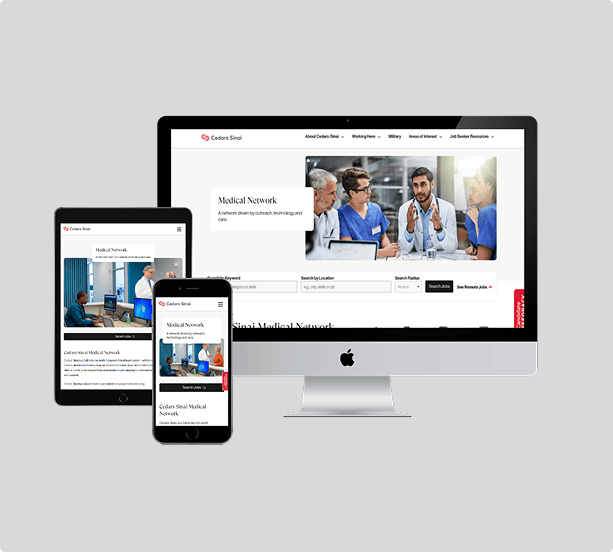
Group Practice Network
Developed an integrated web platform for a 12-location primary care network, featuring location-specific scheduling, provider directories, and a unified patient portal on a single codebase. Reduced IT overhead by 60% compared to managing separate sites, while maintaining location-specific content control through a granular CMS permissions model.
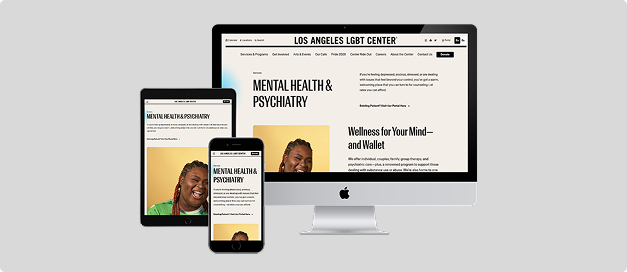
Mental Health Group
Built a web-based intake application for a behavioural health provider, featuring a conditional logic form engine that routes patients to the appropriate clinician based on self-reported symptom severity. Reduced clinician assessment time by 22 minutes per patient and eliminated paper-based pre-visit data collection.
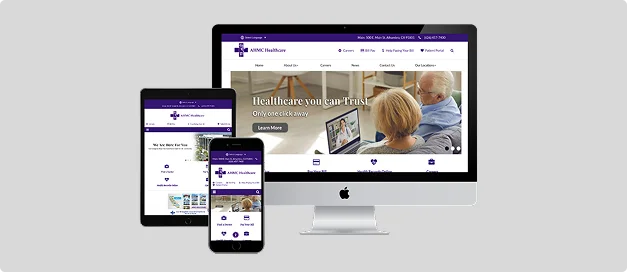
Private Hospital
Developed a secure pre-admission portal for an elective surgery centre, enabling patients to complete surgical consent, provide anesthetic history, and review pre-operative fasting instructions online. The portal is integrated with the hospital’s theatre scheduling system to automate pre-operative reminders.
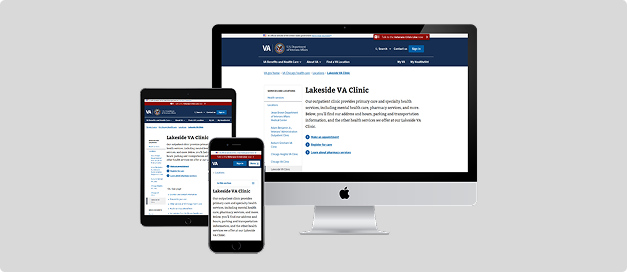
Specialist Clinic
Implemented an online referral intake process for a specialist clinic with a high volume of GP-initiated referrals, replacing a fax-based workflow with an online submission form integrated into the clinic’s management system. Referral processing time was reduced from an average of 4.2 days to same-day acknowledgment with zero manual data entry.
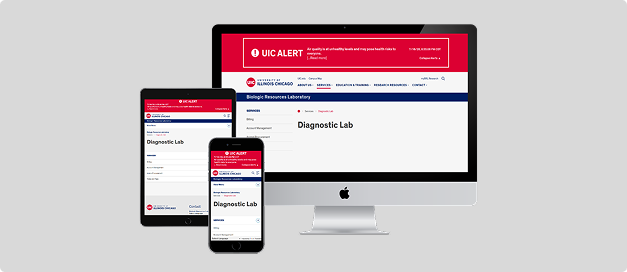
Diagnostic Lab
Developed a patient-facing online report delivery application for a pathology provider, allowing patients to securely access test results via a tokenized SMS link without account creation or password management. Features include full audit logging, session expiry controls, and item-specific explanations, which reduced patient anxiety-related GP call volume.
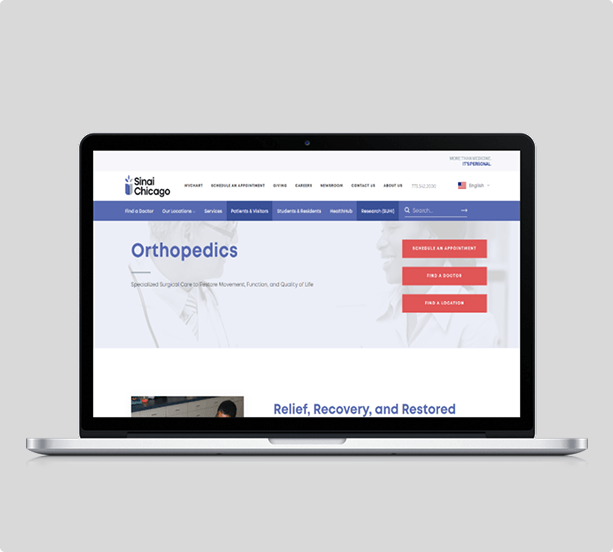
Orthopaedic Practice
Created a web portal for an orthopedic group to support post-surgical recovery, offering phase-specific exercise programs, recovery milestone checklists, and direct messaging with surgeons for joint replacement patients. The portal integrates with the follow-up scheduling system to automatically generate physiotherapy appointment requests based on each patient’s recovery stage.

Build A Medical Website Ready For Every Clinical Scenario
Healthcare websites have to work in real-life situations, not just in perfect demo conditions. A patient may fill out a form on a weak connection, a staff member may use an older browser, or a provider may need secure access without waiting on a developer. We plan for these situations early, testing slow networks, different devices, staff workflows, and EHR or booking system connections before launch. If something changes or breaks later, it is clearly tracked, documented, and fixed, so your team always knows what happened.
Four Development Checks Every Medical Website Must Pass Before Launch
HIPAA Technical Safeguards Checked
Before launch, we review every area where sensitive data may pass through the site. This includes encryption, access controls, audit logs, and automatic session timeouts across logged-in user flows.


No Critical Security Issues
We scan third-party plugins, libraries, and packages before deployment. Any high-risk or critical issues are fixed before launch, not left for emergency patches later.
Core Web Vitals Passed
We test speed, layout stability, and interaction performance across desktop, tablet, and mobile. A medical website should load quickly, feel stable, and work smoothly for every patient.
Full Handover Documentation
At the end of the project, your team receives clear documentation, including site structure, deployment notes, CMS instructions, integration details, and a change log, so you are not dependent on us to understand your own platform.
Healthcare Platforms Developed
EHR & Portal Integrations Completed
Uptime SLA Across Managed Sites
Reported Data Breaches to Date
Technical Infrastructure That Matches The
Operational Complexity Of Your Specialty
Developers Who Understand The Cost Of A Broken Form
On a medical website, a broken form is not a small technical issue. It can mean a missed appointment, a lost patient inquiry, or extra pressure on your front desk. That is why we build, test, and monitor every patient-facing feature with real clinical use in mind.

Healthcare-Only Development Team
Our developers work with healthcare websites, portals, forms, and integrations every day. That means your project starts with people who already understand patient workflows, compliance needs, and the way medical practices operate.

QA Built Into Every Sprint
Testing does not wait until the end. We check forms, devices, browsers, accessibility, and clinical workflows throughout the build, so problems are caught early instead of appearing right before launch.

Clear Development Updates
You get weekly progress updates, access to a live project board, and a technical lead involved in key check-ins. Your team always knows what is done, what is being worked on, and what comes next.

Hosting And Infrastructure Support
For practices that want one reliable technical partner, we also offer managed hosting, uptime monitoring, backups, security updates, and fast support for urgent issues.


Development Questions: Practices to Ask Before Signing A Build Brief
We usually build healthcare websites on custom WordPress, either traditional or headless, without bulky page builders. For more advanced needs, such as portals, intake tools, or custom dashboards, we may use React, Next.js, or a dedicated back-end system. The final stack depends on your integrations, workflow, and long-term maintenance needs.
Yes. Before migration, we review your indexed URLs, rankings, backlinks, and current site structure. We then create a redirect map, preserve key metadata, submit updated sitemaps, and monitor performance after launch. The goal is to protect existing visibility while improving the technical quality of the new site.
Every build goes through functional, device, browser, accessibility, and security testing. We check forms, integrations, mobile layouts, key user flows, and technical performance before the site goes live. You also get staging access, so your team can review clinical and operational workflows before launch.
You do. All custom code, documentation, and project files are handed over after the build. If we manage hosting, the account will remain under your ownership, with direct billing to the provider. We do not lock your website into our systems or make it dependent on us to keep running.
We offer post-launch support for security updates, uptime monitoring, bug fixes, CMS maintenance, small development tasks, and technical health checks. For urgent issues such as downtime, form failures, or integration problems, we provide priority incident response based on your support plan.
Let’s Discuss Your Project


Healthcare Website Development Delivered Across The United States
Healthcare website development doesn’t require us to be in the same city as your practice. Our engineering process is built around asynchronous collaboration tools, weekly video sprint reviews, and a staging environment your team can access throughout the build, so geography introduces no limitations on the quality or pace of what we deliver.
Austin, TX
Charlotte, NC
Columbus, OH
San Jose, CA
Indianapolis, IN
Jacksonville, FL